
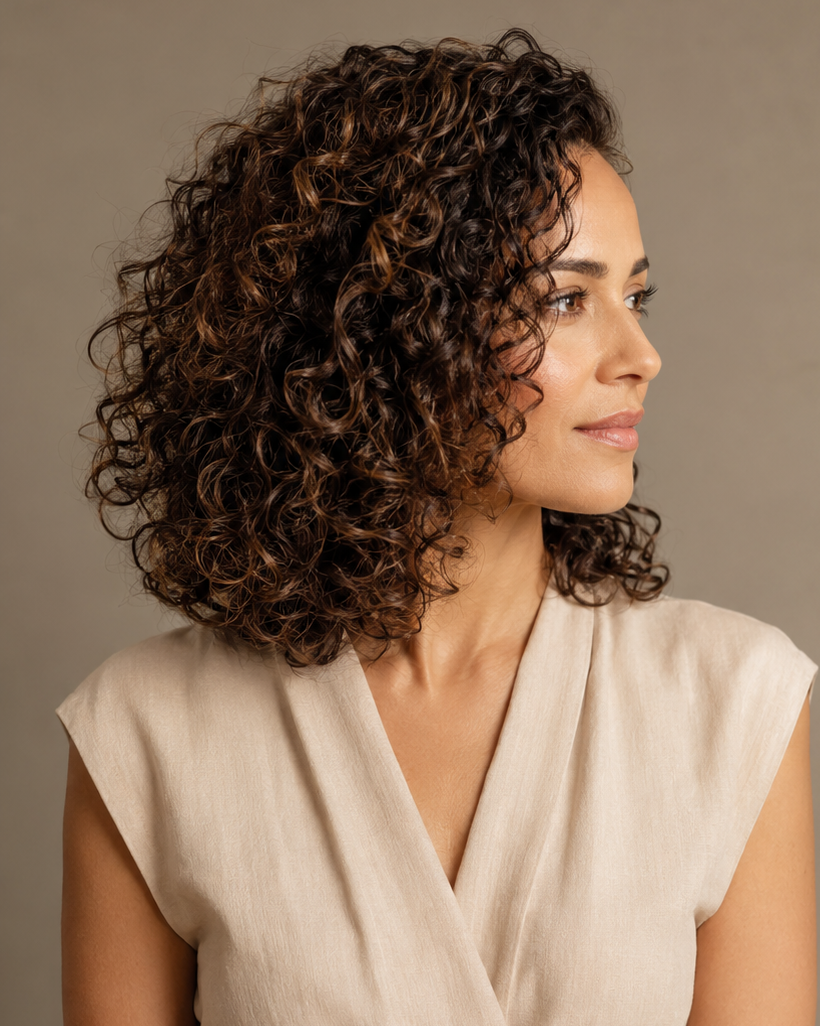
Curly & Coily Hair Expertise for Textured Hair
Looking for a textured hair salon or stylist in Burlington who knows how to work with your naturally curly or coily hair?
Meloo Salon stylists have advanced training on how to cut, shape, colour natural curly hair. All stylists work with curly hair up to hair type 3A to 3C.
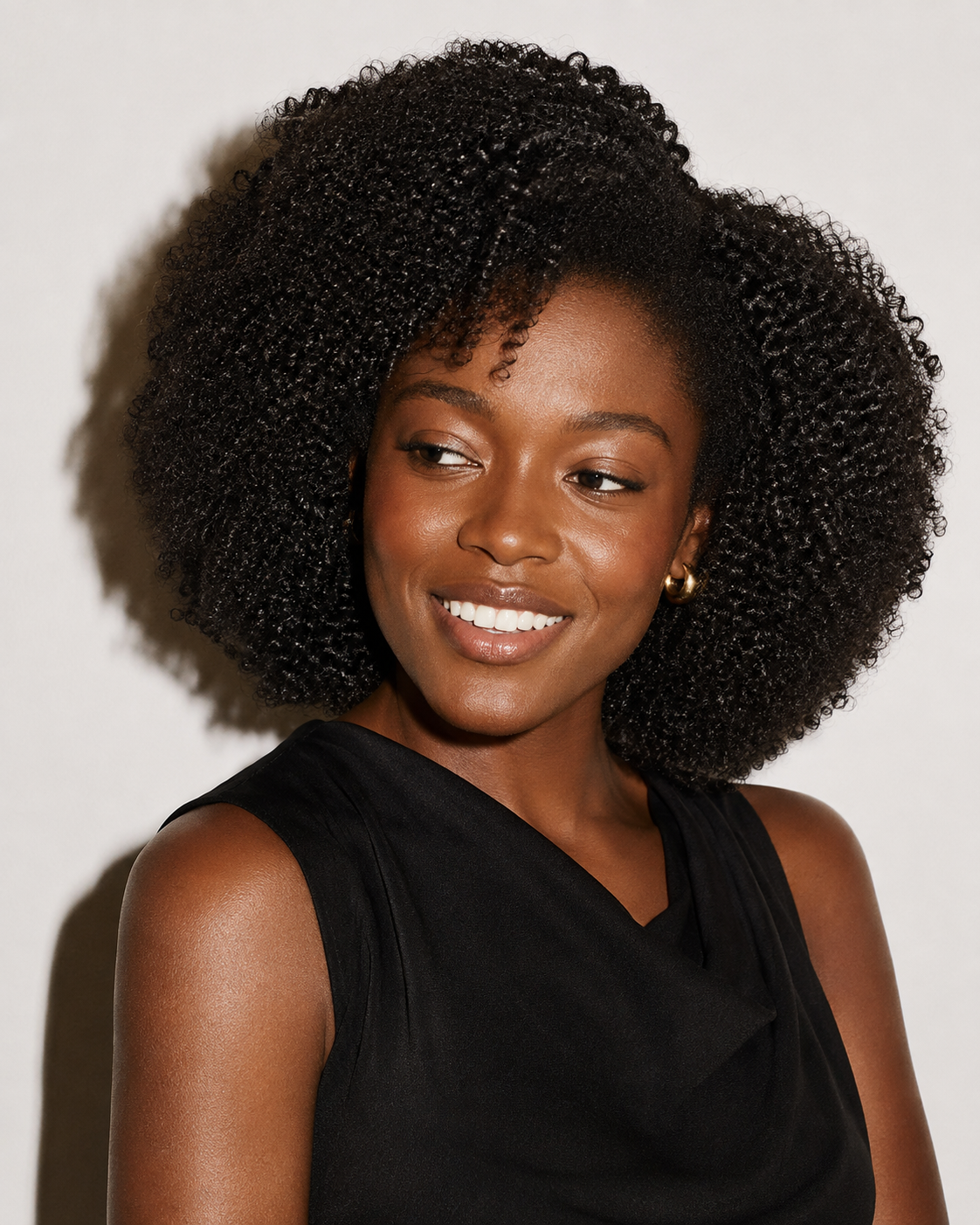
A select group of stylists is especially experienced with styling and maintaining hair type 4A to 4C, very curly hair, hair with lots of texture, and hair of mixed textures. Because they have curly hair themselves, they understand and speak to your concerns about dryness, breakage, thinning, varied curl patterns, loss of curly pattern, and everyday manageability.
All our stylists understand why curly clients may feel apprehensive about trying a new stylist. A stylist who does not understand curly hair may misjudge shrinkage and remove more length than expected, create unwanted bulk, or leave the hair with an uneven shape.
Curly and textured hair have different needs.
Curly and textured hair are often discussed together but they include a broad range of hair patterns and characteristics. Loose waves, soft curls, tight coils, mixed textures, and zigzag coils grow and behave differently. They have different moisture and hydration needs and do not all respond to cutting, products, or styling in the same way.
That’s why expertise and advanced training matter.
What is your curly hair trying to tell you?
Curl pattern is only one consideration. Density, porosity, elasticity, previous chemical services, scalp health, and styling habits all affect what your hair needs.
Your stylist will look at how your hair grows and behaves, how you normally wear it, and what has or has not worked for you in the past. This allows us to recommend a shape, care routine, and styling products based on your actual hair rather than simply assigning it a curl type.


Curly hair cutting and shaping
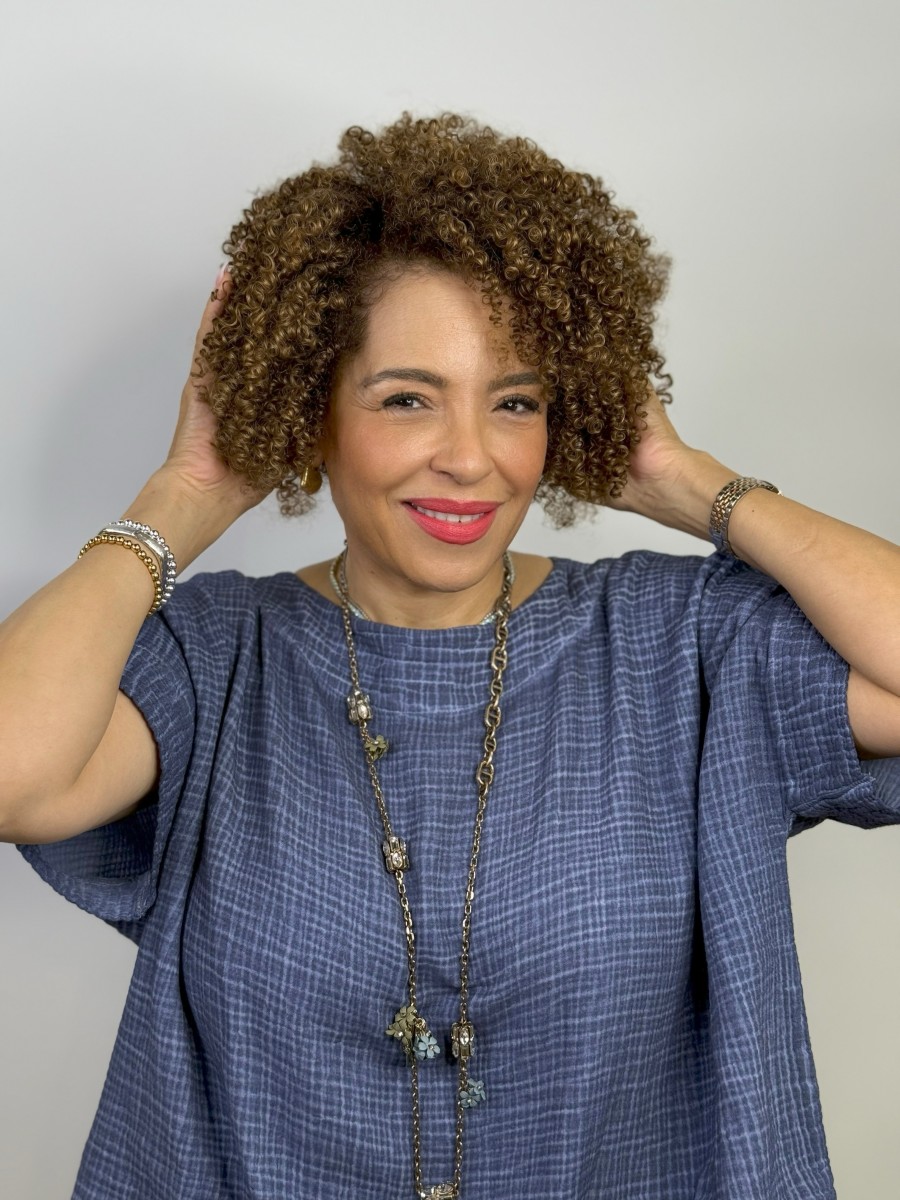
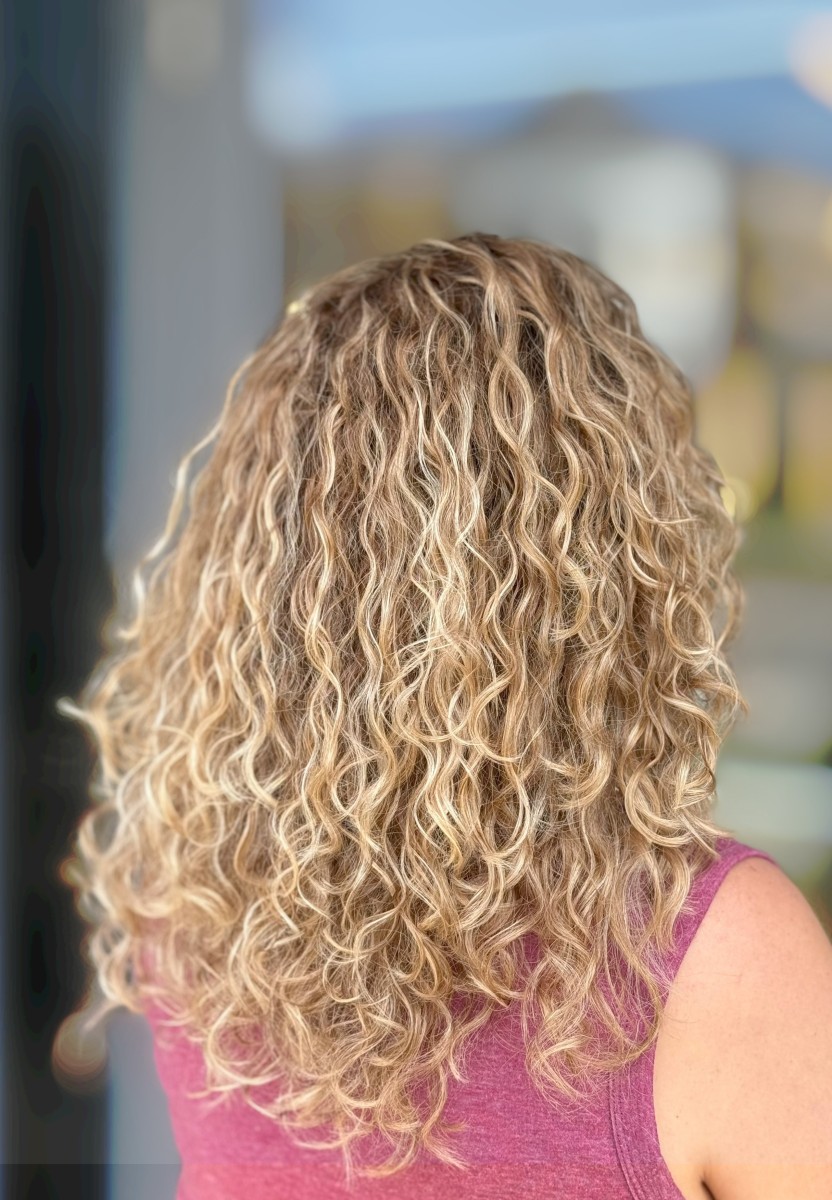
A curly haircut must account for shrinkage, density, weight distribution, and areas with different curl patterns and textures. Removing weight in the wrong place can create unwanted volume or gaps. Leaving too much weight can pull down the curls instead of letting your curls thrive.
We shape the hair to create balance, movement, and a silhouette that works with your face and natural texture. We also consider whether you usually wear your hair curly, stretched, blown out, or in several different ways.
The goal is healthy-looking, well-defined curls and a shape that let’s you love your curls.
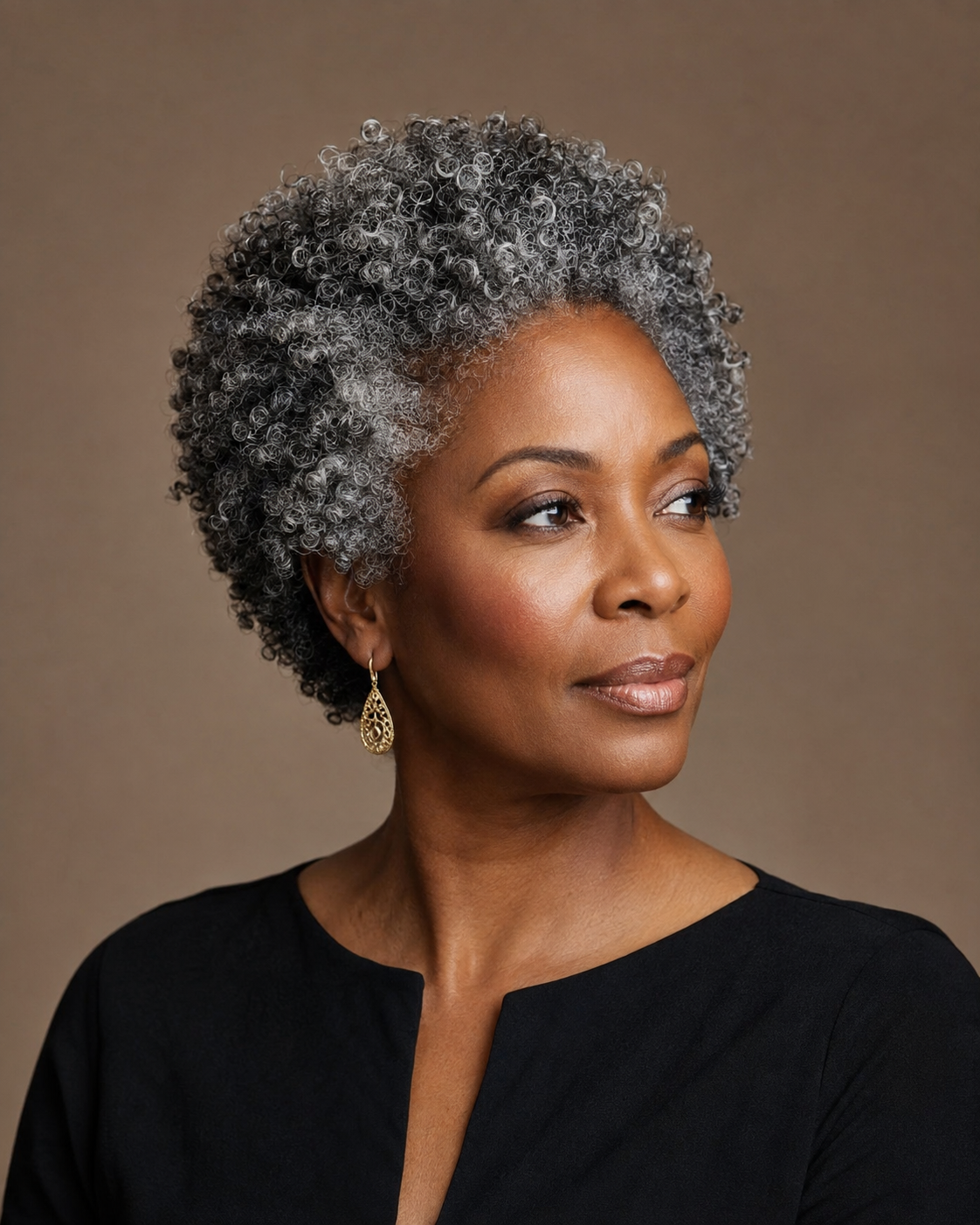
Regular trims support length retention
Regular trims are an important part of maintaining curly and textured hair. Dry, damaged, or split ends are more likely to tangle and break. If they are not removed, the damage can continue farther up the hair shaft.
Cutting your hair may seem counterproductive when you are trying to grow it, but retaining length depends on preventing unnecessary breakage. Removing compromised ends helps protect the healthier hair above them.
Trims also preserve the shape of your haircut. As curly hair grows, some areas may become heavy while others lose definition or balance. Your stylist can recommend a trimming schedule based on the condition of your hair, your styling habits, and your length goals.
Caring for highly textured hair
Highly textured hair is more susceptible to dryness, tangling, and breakage. Natural scalp oils have greater difficulty traveling along tightly coiled strands, making moisture retention and gentle handling especially important. Curls need hydration, and hydration comes from your wash day routine. We’ll talk to you about how often you are shampooing and deep conditioning your along with the products you are using.
Transitioning from chemically relaxed to natural hair
Growing out a chemical relaxer means managing two different hair structures at once: natural new growth and previously relaxed lengths. The point where these textures meet, often called the line of demarcation, can be especially vulnerable to tangling and breakage.
You do not necessarily need to remove all the relaxed hair at once. We can help you transition gradually with regular trims, styling techniques, or non-permanent keratin smoothing treatments to make your overall texture look more cohesive.
As your natural hair grows, we can help you understand your emerging curl pattern, protect the weaker areas, and maintain a flattering shape. Over time, the chemically treated ends can be removed while preserving as much healthy length as possible.
The goal is to restore the condition of your hair so you can wear your natural texture confidently and know how to care for it between appointments.
Understanding moisture and porosity
Curly and textured hair needs moisture, but heavier products are not always better. Products that are too rich can create buildup and weigh down some curls, while products that are too light may not provide enough moisture for tighter coils or highly porous hair.
Porosity describes how readily your hair absorbs moisture and how well it retains it. Density, strand thickness, chemical history, and product buildup can also influence which products and techniques work best.
Your stylist can recommend an at-home wash routine and help you select appropriate cleansers, conditioners, leave-ins, and styling products. We will also explain how and when to use them, so you are not left with a shelf full of products that do not meet your hair’s needs.
Shedding, breakage, and length retention
Curly and highly textured hair grows, but breakage can make it seem as though it never gets longer. Hair that is not brushed or detangled daily may also release several days of naturally shed strands during washing, making normal shedding appear more significant than it is.
Your stylist can help you distinguish between shedding and breakage and identify factors that may be preventing length retention. These may include dry or split ends, rough detangling, excessive heat, chemical damage, constant tension, or products and routines that are not right for your hair.
Wearing your natural curls
Ponytails, braids, extensions, and other protective styles can be useful, but they are not automatically healthy, and they should not be worn for long periods of time without a break. Excess tension and weight, scalp buildup, or leaving a style in too long may contribute to tangling, breakage, or thinning edges.
Learning to care for your natural texture means discovering that it does not always need to be pulled back, braided, covered, straightened, or placed into extensions to be manageable.
With the right haircut, moisture, products, and styling techniques, you can wear your curls and coils out while maintaining softness, definition, shape, and healthy length.
Colour for curly and textured hair
Hair colour changes the structure of the hair and may affect its curl pattern. Curly and textured hair can be coloured, but the plan must account for the hair’s existing condition and strength before lightening or chemical processing.
Colour placement also looks different within curls and coils. Highlights and dimensional colour should be positioned so they remain visible when the hair returns to its natural pattern. The amount of lightening, processing time, and maintenance plan must also protect elasticity and limit excessive dryness or breakage.
Your stylist will assess your hair and discuss what can be achieved safely. If its condition does not support the requested service, we may recommend conditioning treatments, regular trims, or a more gradual colour plan first.
Book a curly or textured hair appointment
If you are visiting Meloo for the first time, tell us about your hair and what you would like help with. This may include a new shape, healthier ends, curl definition, colour, transitioning away from relaxers, or establishing a better home-care routine.
Your stylist will assess your texture, condition, previous services, styling habits, and goals before recommending a plan.
Book online or call Meloo Salon at 905-332-3415.
Rated 4.7 out of 5 ★★★★★ (508)


First time at this salon, everyone was so friendly and helpful. Great experience with William who cut my hair and really understood how to work with my natural texture. Frozan took the time to educate me on the best hair mask that would work best for me. Dont hesitate to try this salon. You will not... be disappointed. read more

Thank you Amanda for the haircut and blowout. It has been awhile since my hair has gotten some love. As someone with curly hair, I really appreciated her knowledge and advice to make sure my hair stays healthy. She went over and above to make sure my hair style would hold up for the event I had late...r in the day (so grateful)! read more

Great place to go if you’re a man with curly hair. I’ve been coming here for years and have never left disappointed.

Carmen taught me how to control my curly hair - gamechanger for me! Always kind and the staff are lovely!
First time at this salon, everyone was so friendly and helpful. Great experience with William who cut my hair and really understood how to work with my natural texture. Frozan took the time to educate me on the best hair mask that would work best for me. Dont hesitate to try this salon. You will not... be disappointed. read more
Thank you Amanda for the haircut and blowout. It has been awhile since my hair has gotten some love. As someone with curly hair, I really appreciated her knowledge and advice to make sure my hair stays healthy. She went over and above to make sure my hair style would hold up for the event I had late...r in the day (so grateful)! read more
Great place to go if you’re a man with curly hair. I’ve been coming here for years and have never left disappointed.
Carmen taught me how to control my curly hair - gamechanger for me! Always kind and the staff are lovely!


Frequent Questions About Our Services for Curly Hair
Do you work with Type 4 curly hair?
«Yes. Our team works with coily, highly textured Type 4A to 4C hair. William has Type 4A hair himself, and several members of our team have both professional and personal experience caring for curly and textured hair.
Can you help me transition away from chemical relaxers?
«Yes. We can develop a gradual transition plan that may include regular trims, conditioning, gentle handling, and an appropriate home-care routine. The goal is to limit breakage as your natural texture grows and gradually remove the relaxed ends.
How often should curly or textured hair be trimmed?
«There is no single schedule for every client. The right timing depends on the condition of your ends, curl pattern, chemical history, styling routine, and length goals. Your stylist will recommend a schedule after assessing your hair.
Can you help me choose products for my curls?
«We can recommend cleansers, conditioners, leave-ins, and styling products based on your hair’s texture, porosity, density, condition, and moisture needs. We will also explain how to use them at home.
Can curly or textured hair be coloured safely?
«Yes, provided the hair is healthy enough for the requested service. We assess its condition, elasticity, and chemical history before recommending a colour or lightening plan.
Can you work with more than one curl pattern?
«Many people have several curl patterns or areas with different densities and levels of shrinkage. The haircut and care plan should account for those differences.
Do you only work with clients who wear their curls naturally?
«We work with all clients whether they prefer to wear their curly hair in its natural state, stretched, smoothed, blown out, or straightened. How you usually wear your hair will be considered when planning your haircut and care routine.